
Shelby County Jail Release Paths
Leaving Shelby County Jail can mean several things. A person may return to the community after pretrial release, bond, dismissal, completion of a county sentence, or another court-authorized event. Someone may instead be delivered to the Illinois Department of Corrections after a prison sentence, another county on an outstanding warrant, the U.S. Marshals Service, or immigration authorities. Each event removes the person from Shelby County custody. Only the first group necessarily describes release to the community.
The recorded disposition matters more than roster absence. Ask whether the jail record says bond, time served, sentence complete, transfer, or another term. A detainer is a request by another authority to hold or receive a person. If a detainer caused a handoff, the next custodian must be checked before describing the person as free. Death also ends a roster presence and must never be called a community release.
County probation is another point that can be missed. A person can leave the Morgan Street jail and still have court-ordered duties through Shelby County Probation. That office is separate from IDOC parole and mandatory supervised release, often called MSR. Probation follows a county court order and does not itself prove that a jail exit occurred on a given date. For the physical event, keep the jail record first. Use the docket and probation office to learn what followed.
| Recorded event | What it means | Next check |
|---|---|---|
| Bond or pretrial release | County custody ended while the case may continue | Shelby court docket and jail event |
| Time served or sentence complete | The local jail term ended | Check probation and other holds |
| IDOC transfer | State prison custody begins | IDOC Individual in Custody Search |
| Federal or ICE handoff | Another sovereign may hold the person | BOP, federal docket, USMS, or ICE source |
Confirm Shelby County Jail Release
The Shelby sheriff site did not provide a county roster, released tab, or historical release search when checked July 16, 2026. A focused verification starts with the jail. The jail's custody-event record is strongest for the physical exit or handoff. The court docket is strongest for the order that authorized it, but a second hold can delay or prevent the expected exit.
- Call Shelby County Jail at 217-774-3941 and ask whether the person remains in county custody.
- If custody ended, ask whether the event was community release or transfer and request the receiving agency when it can be disclosed.
- Check the Shelby County criminal case through the Circuit Clerk or county-coded Judici search for bond, dismissal, sentence, mittimus, or later orders.
- Use Illinois VINE as an agency-fed cross-check. A VINE event can lag and is not the certified jail sheet.
- Submit a narrow written request when the exact release time, disposition, or receiving authority is needed.
A jail name disappearing from view is not proof of community release. Confirm the recorded disposition and the receiving authority.
The full Shelby County released-inmate search and records path also explains state and federal checks. Match at least two stable identifiers, such as full name plus birth date, booking number, or case number. Many states have a Shelby County, so verify the Illinois court code, agency address, and case context.
Shelby County Jail Release Records
The sheriff does not publish a special release-record form or online field list. Illinois Freedom of Information Act requests must be written and should describe the existing records sought in detail. The sheriff page names Tina Wade and Erica Bailey as FOIA officers and gives Erica Bailey as the sample addressee. It does not publish sheriff-specific office hours, an email submission rule, a local fee schedule, or a guaranteed response time beyond the state framework.
Shelby County Sheriff's Office
FOIA Officer Erica Bailey
151 N. Morgan Street
Shelbyville, IL 62565
Phone: 217-774-3941
Fax: 217-774-2851
Office hours: not published on the cited sheriff pages
A useful request identifies the person, birth date if known, booking or case number, and a narrow date range. Ask for the booking and release sheet, admission and release date and time, custody-event history, recorded disposition, and destination or receiving agency if a transfer occurred. Booking photographs may be held separately, so request one by name if it is relevant. Seek electronic copies and ask the office to redact exempt parts while producing the rest.
Phrase the request as a demand for existing records, not a request that the FOIA officer decide whether someone is “free.” Include the requester's name, mailing address, request date, and daytime phone, as the sheriff's directions specify. A narrow date window reduces same-name risk and helps staff locate the right custody episode. If the answer gives only a court order, ask whether a jail event log records the later physical exit. If it gives a transfer notation, ask for the destination or receiving agency when that field can be disclosed.
Illinois FOIA, 5 ILCS 140, generally gives public bodies five business days for a noncommercial request, subject to a written extension of up to five business days for stated reasons. Statutory copy-fee rules and exemptions can apply. Judicial records follow court access procedures instead because the judicial branch is outside FOIA.
Shelby County Jail Facts
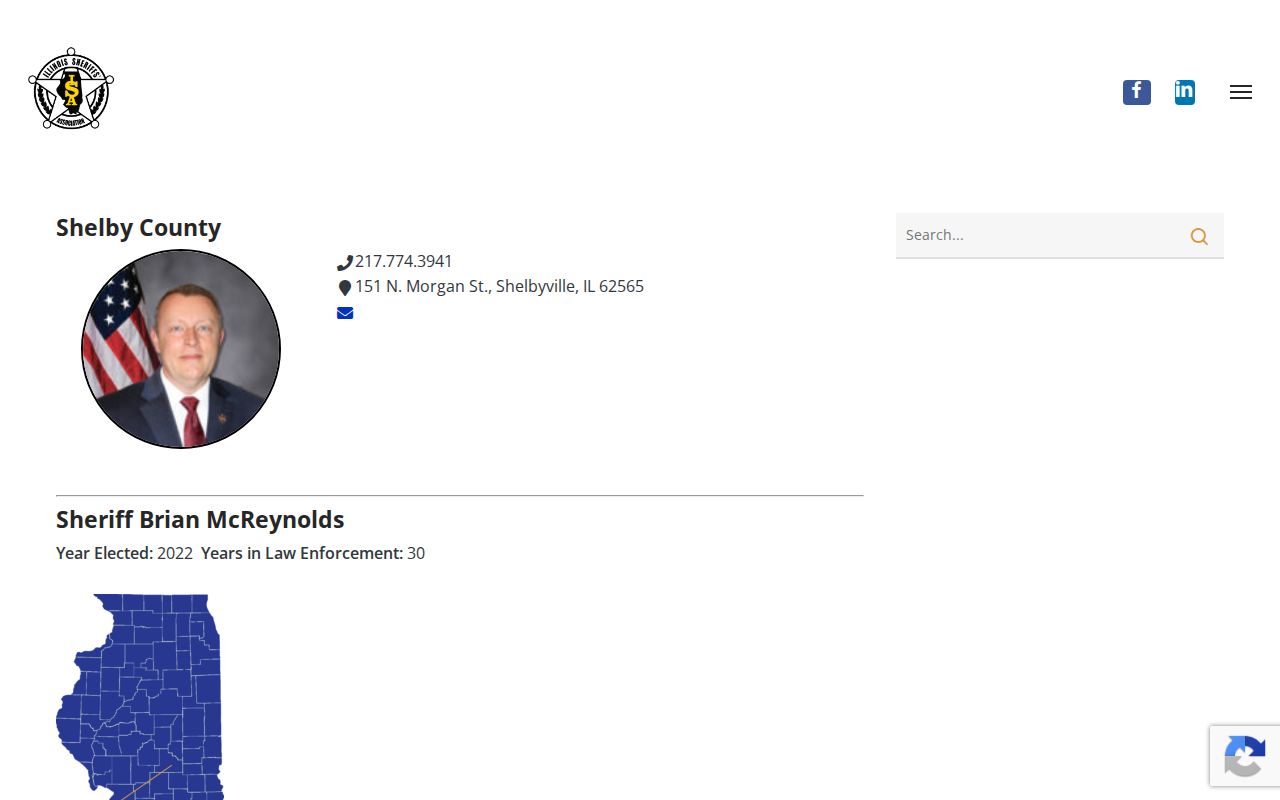
Shelby County Jail is operated by the Shelby County Sheriff's Office at 151 N. Morgan Street in Shelbyville. Sheriff Brian McReynolds is the elected sheriff, and the Illinois Sheriffs' Association names Daine Burkhead as jail administrator. Its directory lists 27 beds. That figure gives scale only. It does not prove staffing, release pace, processing time, or record retention.
The Illinois Sheriffs' Association directory provides the facility address, capacity, administrator, and directions. It says to take Illinois Route 16 to Morgan Street, turn north, and find the jail about one-half block down on the east side. Those details help with wayfinding. They do not identify an exit door or a place where family members may wait.
The official jail page gives visitation and account information for current detainees. Remote visits are listed seven days a week from 8 a.m. to 8 p.m.; onsite visits are Tuesday through Saturday from 8 a.m. to 3:30 p.m. and must be set at least 24 hours ahead. These are visitation hours, not release-processing hours.
Shelby County Jail's Small Scale
The 27-bed figure makes a direct call or precise records request a concrete local fallback. It does not support a claim that releases happen faster or that a staff member can give every detail by phone. The official sheriff pages did not publish release hours, a family waiting area, property pickup rules, weekend procedures, or a public release feed.
An IDOC compliance report documents a September 26, 2023 monitoring visit and names Administrator Burkhead. It noted improvements at that time, including added mental-health service hours, a medication-assisted recovery program, contracted food service, and kitchen work. Those facts provide facility history. They are not current release guarantees.
The state sheriffs' directory entry shows the local jail details used for this Shelby County release route.
Shelby County Release Contact
The sheriff's official contact page is the source for the Morgan Street address, main phone, fax, and administrative contacts.
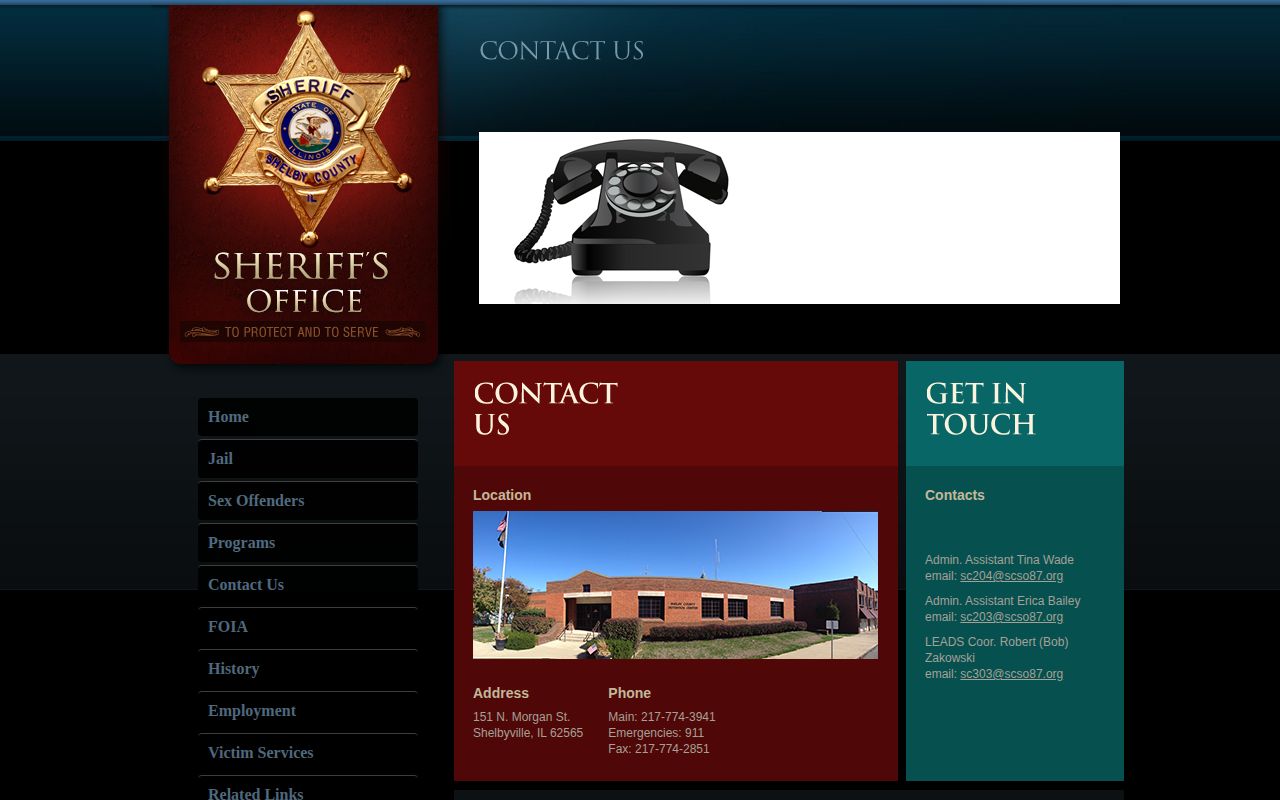
Use that office for a current county-custody question, then use a written FOIA request when the exact recorded event is needed.
Record the date, time, office, and precise wording of any phone confirmation. If sources conflict, ask for the underlying custody-event record rather than smoothing over the conflict. A court order, VINE alert, and jail exit can have different timestamps for valid reasons.
Do the same with online checks. Save the exact status wording, source agency, retrieval date, and the identifiers used to match the record while avoiding needless personal detail. “Released from Shelby County Jail” should not be expanded to “returned home” unless the record rules out a transfer. Likewise, an IDOC projected parole date is a forecast, not proof that the person has left prison. Narrow language makes the result both more useful and more faithful to the agency record.